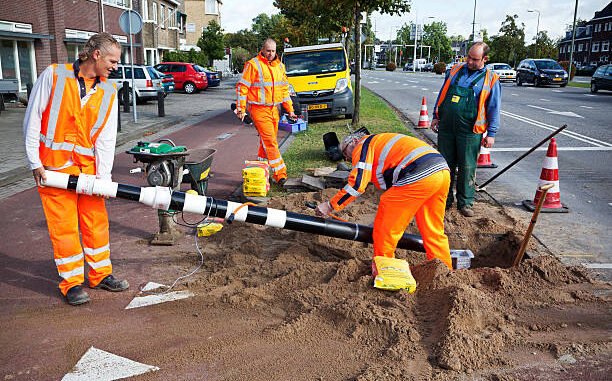
The Netherlands has built a reputation as one of Europe’s most attractive destinations for international workers who want to develop a career, earn a competitive income, and experience life in a highly organized economy. Among the industries creating opportunities for workers with practical skills, the construction sector stands out.
From residential housing and commercial buildings to roads, bridges, utilities, renovations, energy infrastructure, and major sustainability projects, construction workers play an essential role in the Dutch economy. For foreigners with construction experience, this can create opportunities to explore employment with Dutch companies that are willing and legally able to recruit workers from outside the Netherlands.
This article focuses on high paying construction laborer jobs in the Netherlands for foreigners with sponsorship. It explains the types of construction jobs you can pursue, potential salary factors, qualifications employers look for, how sponsorship works, where to search for vacancies, how to prepare your application, and how to avoid common recruitment scams.
The opportunity is real, but applicants should understand one important point from the beginning: a construction vacancy that mentions international recruitment does not automatically mean that the employer will sponsor every foreign applicant for a Dutch work permit. Immigration requirements depend on your nationality, job, contract, employer, and residence situation.
For non-EU/EEA nationals, Dutch immigration rules can require an employer to arrange the appropriate authorization before the worker starts employment. The IND explains that the GVVA (single permit) combines residence and employment authorization for many paid-employment situations.
At the same time, the Dutch construction industry continues to face recruitment challenges. UWV reports that construction remains a sector where employers experience significant difficulty finding workers, while demand continues in areas such as infrastructure, maintenance, renovation, and technical construction work.
That combination makes the Netherlands worth considering if you have practical construction skills and want to build an international career.
1. Why Consider Construction Jobs in the Netherlands?
Construction is one of the industries that directly supports economic development. Every new building, road, housing project, renovation, energy project, bridge, tunnel, and utility network requires skilled and dependable workers.
The Netherlands has particularly complex construction needs because the country continuously invests in housing, infrastructure, energy networks, water management, building renovation, and sustainability.
UWV identifies construction, energy, and installation technology among sectors with good employment prospects. Its 2026 list of promising occupations includes several construction-related professions, including bricklayers and other skilled occupations.
For a foreign worker, construction can be attractive because many jobs focus heavily on practical skills.
You may not need a university degree to begin a construction career.
Instead, employers may value:
- Construction experience
- Practical skills
- Physical fitness
- Reliability
- Safety awareness
- Technical knowledge
- Ability to use construction tools
- Ability to understand drawings or instructions
- Previous project experience
- Professional qualifications
- Willingness to learn Dutch procedures
However, your chances improve significantly when you have a specific trade instead of applying only as a general laborer.
2. What Does a Construction Laborer Do?
A construction laborer supports different activities on construction sites.
The exact duties depend on the employer and project.
A general construction laborer may:
- Prepare construction areas
- Move materials
- Load and unload equipment
- Assist skilled tradespeople
- Clean work areas
- Prepare tools
- Mix or move construction materials
- Assist with demolition
- Dig trenches
- Support concrete work
- Carry equipment
- Help with basic installation work
- Follow safety instructions
- Maintain organized work areas
- Assist carpenters, bricklayers, roofers, or other tradespeople
Some positions require more specialized skills.
For example, an experienced worker might progress from general laborer work into:
- Bricklaying
- Carpentry
- Concrete work
- Roofing
- Tiling
- Plastering
- Steel fixing
- Scaffolding
- Road construction
- Groundwork
- Paving
- Drywall installation
- Painting
- Demolition
- Infrastructure work
This distinction matters when searching for jobs.
A worker who searches only for “construction laborer” vacancies may miss opportunities advertised under specific Dutch or English job titles.
3. Construction Jobs That Foreigners Can Explore
If you have construction experience, consider searching for several categories rather than one job title.
Construction Laborer
General construction laborers support experienced tradespeople and site supervisors.
Employers may ask for previous construction experience, physical fitness, safety awareness, and the ability to work as part of a team.
This can be an entry point for workers who have practical experience but do not yet have an advanced trade qualification.
Bricklayer
Bricklayers construct walls and other masonry structures.
This is a more specialized occupation than general laboring.
Experience with:
- Brickwork
- Mortar
- Wall construction
- Measurements
- Construction drawings
- Finishing
can make your application stronger.
UWV currently identifies bricklayers and pointing specialists among promising occupations.
Carpenter
Carpenters can work on structural frameworks, doors, windows, roofs, interiors, and other building components.
Experienced carpenters can have better employment prospects than applicants with only general labor experience.
Concrete Worker
Concrete workers participate in activities involving foundations, floors, walls, columns, roads, and other structures.
Employers may seek experience with:
- Concrete preparation
- Formwork
- Reinforcement
- Pouring
- Finishing
- Construction equipment
Construction Finisher
Finishing work can include:
- Plastering
- Tiling
- Painting
- Flooring
- Drywall
- Interior finishing
Experienced finishers can find opportunities in residential and commercial renovation projects.
Roofer
Roofing workers install, repair, and maintain roofs.
Roofing requires strong safety awareness because workers frequently operate at height.
Road Construction Worker
Road construction provides opportunities in infrastructure projects.
Workers may assist with:
- Road preparation
- Paving
- Drainage
- Groundwork
- Excavation
- Site preparation
- Infrastructure maintenance
Groundworker
Groundworkers prepare land and underground infrastructure before or during construction.
Their work can involve:
- Excavation
- Drainage
- Foundations
- Underground pipes
- Cable installation
- Site preparation
UWV reports particularly strong shortages in parts of ground, water, and road construction.
4. Why Skilled Construction Workers May Have an Advantage
Not every construction position offers the same employment prospects.
A general laborer competes with many applicants because the role requires fewer specialized qualifications.
A skilled worker can offer something more valuable.
For example, an employer searching for an experienced bricklayer may have fewer suitable candidates than an employer searching for someone who can simply carry materials.
That is why foreign applicants should consider developing a specific trade.
Instead of presenting yourself simply as:
Construction Worker
you could build your professional profile around a specific specialization such as:
Experienced Bricklayer
or:
Construction Carpenter
or:
Concrete Construction Worker
or:
Road Construction Worker
Specialization can help employers immediately understand what you can contribute to their projects.
5. What Does “Sponsorship” Mean in the Netherlands?
The word “sponsorship” can cause confusion.
In international recruitment, employers sometimes use “visa sponsorship” to describe their willingness to help a foreign employee obtain the immigration authorization needed to work legally.
However, Dutch immigration authorization is not simply a company paying for a visa.
The employer and employee must satisfy applicable immigration and employment requirements.
For many foreign workers entering paid employment, the GVVA combines a residence permit with authorization to work. The IND states that the GVVA allows an employee to live and work in the Netherlands.
The exact route depends on the worker’s situation.
Therefore, before accepting an offer, ask the employer:
- Will you hire workers who live outside the Netherlands?
- Do you support the required work authorization?
- Will you submit the necessary application?
- Which immigration route applies to this position?
- Is the position eligible for the required permit?
- Who pays the official application costs?
- Will you provide a written employment contract?
- What happens if the permit application is refused?
Do not rely on the phrase “visa sponsorship available” alone.
Ask for details.
6. Who May Need a Work Permit?
Your nationality matters.
Citizens of EU/EEA countries and Switzerland generally have different rights from people coming from countries outside those areas.
If you are a non-EU/EEA national, you should assume that you need to check Dutch immigration requirements before accepting employment.
The IND states that people working in paid employment may need a GVVA, while some situations use another residence or work authorization.
The correct permit depends on factors such as:
- Nationality
- Current residence
- Type of employment
- Employment duration
- Employer
- Job category
- Existing Dutch residence status
- Applicable immigration exemption
This is why applicants should verify their specific circumstances through the Dutch immigration authorities rather than relying on social-media posts or recruitment advertisements.
7. How Much Can Construction Workers Earn?
One of the most important reasons people search for construction jobs abroad is earning potential.
However, you should be careful with websites that advertise unrealistic salaries such as “€8,000 per month guaranteed for construction laborers.”
Construction salaries vary considerably.
Your income can depend on:
- Trade
- Experience
- Employer
- Collective labor agreement
- Contract
- Working hours
- Overtime
- Location
- Qualifications
- Project
- Shift arrangements
- Allowances
- Tax situation
The Dutch government sets a statutory minimum hourly wage. From 1 July 2026, the minimum hourly wage for employees aged 21 and older is €14.99 before tax.
That figure is a legal floor, not a typical salary for every construction occupation.
Experienced workers with specialized skills can earn more depending on their employment agreement and sector arrangements.
Remember that gross salary is not the same as take-home salary.
If an advertisement says:
€3,500 monthly
you should ask whether that figure is:
- Gross or net
- Based on 40 hours
- Inclusive of overtime
- Inclusive of holiday allowance
- Inclusive of allowances
- Guaranteed
- Dependent on performance
The Dutch government also explains that certain payments and allowances are treated differently when determining minimum wage entitlement.
8. Why Specialization Can Increase Your Earning Potential
A worker with specialized skills can potentially command a stronger salary than a general laborer.
Consider the difference between these profiles:
Profile A
A general laborer with one year of experience.
Profile B
A carpenter with seven years of experience who can interpret construction drawings.
The second worker offers a more specialized skill set.
Employers may therefore consider the second candidate for more skilled positions.
The same applies to:
- Bricklayers
- Welders
- Electricians
- Plumbers
- HVAC technicians
- Concrete specialists
- Heavy equipment operators
- Road construction workers
- Roofers
- Experienced carpenters
If your long-term goal involves earning more, do not focus only on finding the first available job.
Build skills that employers need.
9. Construction Labor Market in the Netherlands
The Dutch construction labor market has experienced persistent recruitment difficulties.
UWV reports that the construction sector continues to face difficulty finding sufficient workers. It also notes that aging workers create additional replacement demand as employees retire.
Infrastructure creates another source of demand.
The Netherlands needs workers for:
- Roads
- Bridges
- Water infrastructure
- Tunnels
- Utility networks
- Buildings
- Renovation
- Maintenance
- Energy infrastructure
UWV reported that nine of the 15 construction occupations with the greatest labor-market shortages were connected to infrastructure activities.
This does not mean every construction applicant will automatically receive an offer.
Instead, it means that qualified candidates can target areas where employers have genuine recruitment needs.
10. Renovation and Maintenance Create Opportunities
New construction receives much of the public attention, but renovation and maintenance also create substantial employment.
Older buildings require:
- Roof repairs
- Insulation
- Painting
- Plumbing
- Electrical upgrades
- Window replacement
- Flooring
- Structural repairs
- Energy improvements
- Interior renovation
The Netherlands also continues to invest in energy efficiency and infrastructure.
UWV has highlighted maintenance, renovation, and energy-transition work as important sources of construction demand.
This creates an opportunity for workers who have practical renovation skills.
If you have experience renovating houses or commercial buildings in your home country, include those projects prominently on your CV.
11. Skills Dutch Construction Employers May Look For
A strong construction CV should communicate your abilities quickly.
Employers may value:
Technical skills
Mention the exact construction activities you can perform.
For example:
- Bricklaying
- Concrete work
- Formwork
- Carpentry
- Roofing
- Plastering
- Tiling
- Excavation
- Paving
- Drywall
- Painting
- Demolition
- Site preparation
Equipment experience
Mention machinery and tools you can safely operate.
Examples include:
- Power tools
- Drills
- Grinders
- Concrete mixers
- Compactors
- Construction saws
- Hand tools
- Measuring equipment
Only list equipment you genuinely know how to use.
Safety awareness
Construction employers take workplace safety seriously.
Mention:
- PPE use
- Working-at-height awareness
- Site safety procedures
- Hazard identification
- Safe tool handling
- Manual handling procedures
Teamwork
Construction projects require coordination.
Explain how you have worked with:
- Site managers
- Engineers
- Supervisors
- Tradespeople
- Contractors
- Other laborers
12. Experience Matters
Do not simply write:
“I have construction experience.”
Give evidence.
For example:
“Worked on residential construction projects involving bricklaying, concrete preparation, material handling, site preparation, and finishing.”
Even better, provide measurable details where possible.
For example:
“Supported construction teams on more than 20 residential renovation projects.”
Specific information makes your CV more credible.
13. Create a Strong Construction CV
Your CV should normally contain:
- Full name
- Contact information
- Professional summary
- Construction skills
- Employment history
- Education
- Professional certifications
- Equipment experience
- Languages
- References, if appropriate
Your professional summary should immediately tell the employer what you do.
For example:
Experienced construction worker with several years of practical experience in residential and commercial projects, including concrete work, material preparation, site support, and general construction activities.
Then list your skills clearly.
Avoid filling your CV with irrelevant information.
A construction employer usually wants to know what you can do on a job site.
14. Add Photographs of Your Work
If appropriate, a professional portfolio can strengthen your application.
You can include photographs showing completed:
- Brick walls
- Roof installations
- Concrete structures
- Tiling
- Carpentry
- Interior finishing
- Renovation projects
Make sure you have permission to use the photographs.
A portfolio allows an employer to see evidence of your practical ability instead of relying entirely on written claims.
15. Learn Basic Dutch
You do not necessarily need to speak perfect Dutch before applying for every construction position.
However, learning basic Dutch can significantly improve your workplace experience.
Construction sites involve instructions about:
- Tools
- Materials
- Measurements
- Safety
- Directions
- Equipment
- Emergency procedures
Knowing basic Dutch construction vocabulary can help.
At the same time, English remains useful because many international workplaces operate with multilingual teams.
A strong strategy is to learn both:
Practical English + basic Dutch construction vocabulary.
16. Safety Is Extremely Important
Construction work involves physical risks.
Employers expect workers to follow safety procedures.
You may need to work around:
- Heavy machinery
- Vehicles
- Power tools
- Heights
- Electricity
- Dust
- Chemicals
- Excavation
- Moving materials
Never sacrifice safety to appear fast.
Use appropriate personal protective equipment and follow site instructions.
If an employer tells you to ignore safety requirements, treat that as a serious warning sign.
17. Qualifications Can Strengthen Your Application
Formal qualifications can help demonstrate competence.
Depending on the trade, useful qualifications may include:
- Construction certificates
- Trade school qualifications
- Apprenticeship certificates
- Equipment certificates
- Health and safety training
- First-aid training
- Specialized trade certifications
Foreign qualifications may require recognition or assessment depending on the job.
Do not assume that every certificate automatically has the same legal or professional status in the Netherlands.
Ask the employer whether your qualification meets the requirements for the position.
18. Where to Search for Construction Jobs
Foreign applicants should use multiple channels.
Dutch job websites
Search major Dutch employment platforms using terms such as:
- Construction worker Netherlands
- Construction laborer Netherlands
- Bouwvakker
- Bouwmedewerker
- Timmerman
- Metselaar
- Grondwerker
- Dakdekker
- Betontimmerman
Learning Dutch job titles can significantly expand your search results.
Company career pages
Find construction companies and visit their careers pages.
Look for sections such as:
- Vacancies
- Careers
- Jobs
- Werken bij
- Open positions
Recruitment agencies
Some agencies specialize in construction recruitment.
Before accepting an offer, verify:
- The agency’s identity
- Employer identity
- Employment contract
- Salary
- Accommodation terms
- Permit arrangements
- Fees
- Working hours
Never send money simply because someone claims that you have been selected.
19. How to Search for Sponsorship Jobs
Use specific search phrases.
Try:
Construction jobs Netherlands visa sponsorship
Construction laborer Netherlands sponsorship
Skilled construction worker Netherlands foreign workers
Bricklayer jobs Netherlands international applicants
Carpenter Netherlands work permit sponsorship
Road construction jobs Netherlands foreign workers
Construction vacancies Netherlands English speaking
You can also search for Dutch terms.
For example:
bouw vacatures
bouwmedewerker vacatures
timmerman vacatures
metselaar vacatures
grondwerker vacatures
Then check whether the employer accepts candidates who require immigration authorization.
20. How to Identify a Genuine Sponsorship Opportunity
A genuine employer should be able to provide clear information.
Ask for:
- Company name
- Company website
- Job title
- Workplace location
- Salary
- Working hours
- Contract type
- Start date
- Required qualifications
- Work-permit process
- Accommodation arrangements
- Contact person
Be cautious when someone says:
“Pay €2,000 and I will guarantee your Netherlands visa.”
No legitimate recruiter can simply guarantee immigration approval.
Your application must satisfy the applicable rules.
21. Common Construction Job Scams
Foreign workers often become targets for fake overseas recruitment.
Watch for warning signs.
Guaranteed visa
Be cautious when someone guarantees immigration approval.
Very high salary with no experience
An advertisement offering an unusually high salary to inexperienced workers deserves careful verification.
Upfront “processing fee”
Do not assume a payment request is legitimate because the person claims to represent a Dutch company.
No interview
A serious employer will usually want to assess your skills and experience.
Personal bank account
Be particularly cautious if someone asks you to transfer recruitment money into an individual’s personal account.
Fake contracts
Fraudsters can create documents that look official.
Verify the employer independently.
22. Understand Your Employment Contract
Before traveling, carefully read your contract.
Look for:
- Job title
- Salary
- Hours
- Overtime
- Holiday entitlement
- Probation period
- Contract duration
- Termination conditions
- Workplace
- Accommodation
- Transportation
- Deductions
- Insurance
- Benefits
If you do not understand something, ask for clarification before signing.
Do not rely solely on verbal promises.
If the recruiter promises free accommodation but the contract says you must pay €500 per month, the written terms matter.
23. Accommodation for Foreign Construction Workers
Some employers or agencies may offer accommodation.
This can be useful for workers arriving from abroad.
However, “accommodation provided” does not always mean “free accommodation.”
Ask:
- Is it free?
- If not, how much does it cost?
- Is the amount deducted from salary?
- How many people share the property?
- How far is it from work?
- Is transportation provided?
- What happens if you leave the job?
Always calculate your expected take-home income after legitimate deductions.
24. Transportation to Construction Sites
Construction workers may work at different locations.
Your job could involve traveling between:
- Construction sites
- Warehouses
- Workshops
- Residential developments
- Infrastructure projects
Ask the employer whether transportation is provided.
If you need a driving license, confirm which type is required.
If you have a valid driving license and construction employers frequently require transportation between sites, mention this on your CV.
25. How to Improve Your Chances of Getting Hired
Competition can be strong.
You can improve your chances by combining several strategies.
Strategy 1: Specialize
Become known for a specific construction skill.
Strategy 2: Document your experience
Keep records of projects and responsibilities.
Strategy 3: Improve your CV
Make it clear and professional.
Strategy 4: Learn Dutch basics
This can improve communication.
Strategy 5: Obtain relevant certifications
Use legitimate training providers.
Strategy 6: Apply consistently
Do not send one application and wait for months.
Strategy 7: Target employers with genuine international recruitment
Not every company has the infrastructure or willingness to hire workers abroad.
26. Why General Laborers Should Consider Learning a Trade
If you currently work as a general laborer, think about your long-term career.
General laboring can be a useful starting point.
But specialized skills can potentially open better opportunities.
You could gradually develop skills in:
- Bricklaying
- Carpentry
- Concrete work
- Roofing
- Tiling
- Plumbing
- Electrical work
- Groundwork
- Infrastructure
Your goal should not simply be:
“I want a job in Europe.”
Your goal should become:
“I want a valuable construction skill that Dutch employers need.”
That mindset can make your international job search much stronger.
27. Construction and the Energy Transition
The Dutch construction industry is changing.
Energy transition projects create demand for workers involved in:
- Building upgrades
- Insulation
- Heating systems
- Utility networks
- Electrical infrastructure
- Sustainable buildings
- Energy-related installations
UWV identifies the energy transition and modernization of infrastructure as important sources of future work.
Construction workers who develop additional technical skills can therefore position themselves for evolving opportunities.
28. Infrastructure Construction
Infrastructure represents another major opportunity.
The Netherlands depends heavily on:
- Roads
- Railways
- Bridges
- Canals
- Water systems
- Underground utilities
- Electricity networks
Workers with experience in groundwork, road construction, excavation, concrete, drainage, and infrastructure maintenance can target companies working in these areas.
UWV has reported particularly strong shortages in ground, water, and road construction occupations.
29. The Importance of Reliability
Technical ability alone does not guarantee a successful construction career.
Employers also value reliability.
A reliable worker:
- Arrives on time
- Follows instructions
- Uses safety equipment
- Takes care of tools
- Works effectively with others
- Communicates problems
- Maintains professional behavior
- Completes assigned tasks
International employers also want confidence that workers will respect their contracts and workplace rules.
Build a reputation for reliability.
30. How to Prepare Before Leaving Your Home Country
Do not wait until you receive a job offer to prepare.
Start preparing your documents early.
Keep copies of:
- Passport
- Birth certificate where relevant
- Educational certificates
- Trade qualifications
- Employment references
- Training certificates
- Driving license
- Work portfolio
- CV
- Passport photographs where required
Make digital backups of important documents.
Use secure storage.
If your documents are not in a language accepted by the relevant authority or employer, ask whether translation or legalization is required.
31. Interview Questions You May Face
A construction employer may ask:
“How many years of construction experience do you have?”
Give an honest answer.
“What type of construction work have you done?”
Describe specific projects.
“What tools can you use?”
List tools you actually understand.
“Can you read construction drawings?”
Answer honestly.
“Have you worked at height?”
Explain your experience and training.
“Can you work overtime?”
State your availability.
“Do you speak English or Dutch?”
Explain your language level honestly.
“Do you currently have the right to work in the Netherlands?”
If you require authorization, say so.
Never claim that you have work authorization when you do not.
32. Prepare a Short Professional Introduction
When contacting recruiters, avoid sending only:
“I need construction job in Netherlands.”
Instead, introduce yourself professionally.
Mention:
- Your trade
- Years of experience
- Key skills
- Nationality/residence situation
- Availability
- Work authorization requirement
This immediately gives the recruiter useful information.
33. What Employers May Expect From Sponsored Workers
If an employer invests time and resources in recruiting internationally, they need dependable employees.
You should therefore demonstrate:
- Commitment
- Relevant skills
- Professional conduct
- Flexibility
- Safety awareness
- Willingness to learn
- Ability to work with different cultures
Do not view sponsorship simply as a ticket into Europe.
View it as an employment relationship.
You need to deliver value to the employer.
34. What “High Paying” Really Means
Search engines often use the phrase “high paying construction jobs” because it attracts applicants.
But salary should not be the only factor.
A €3,200 gross salary with expensive accommodation and transportation deductions may leave you with less disposable income than a €2,900 gross salary with better benefits.
Compare the entire package.
Look at:
Gross salary + overtime + allowances + benefits − taxes − accommodation − transportation − other deductions.
This gives you a better picture of the actual financial value.
35. Minimum Wage Protection
Dutch employees are protected by statutory minimum wage rules.
The government states that employees aged 21 and older are entitled to the applicable minimum wage, including workers employed through agencies and contractors in covered employment situations.
As of 1 July 2026, the statutory minimum hourly wage for workers aged 21 and older is €14.99 before tax.
If an employer offers significantly less, investigate the arrangement carefully.
Never assume that a foreign worker has fewer workplace rights.
36. Overtime and Allowances
Construction work may involve overtime.
However, do not assume that every advertised salary includes overtime.
Ask:
- What is the normal working week?
- What is the overtime rate?
- Is overtime voluntary?
- Are weekends paid differently?
- Are night shifts paid differently?
- Are travel hours paid?
- Are meal allowances provided?
Get the answers in writing.
37. Building a Long-Term Career in the Netherlands
Your first job does not have to be your final job.
You could progress from:
General Laborer → Skilled Worker → Senior Tradesperson → Team Leader → Site Supervisor
With additional training and experience, some workers can move into technical or supervisory positions.
The construction industry also offers paths toward:
- Foreman
- Site supervisor
- Construction technician
- Planner
- Estimator
- Project coordinator
Your progression depends on your skills, education, language ability, experience, and the opportunities available to you.
38. Do Not Ignore Dutch Language Skills
If you plan to stay in the Netherlands for several years, learning Dutch can be a major investment.
Language can help you:
- Communicate with supervisors
- Understand safety instructions
- Speak with colleagues
- Understand workplace documents
- Handle everyday life
- Progress professionally
You do not need to become fluent immediately.
Start with construction vocabulary.
Learn words related to:
- Tools
- Safety
- Materials
- Directions
- Measurements
- Time
- Numbers
- Emergency instructions
Then gradually expand your vocabulary.
39. What Foreign Applicants Should Never Do
Never:
- Use fake certificates
- Lie about experience
- Submit false documents
- Work without required authorization
- Pay unknown people for guaranteed immigration approval
- Ignore contract terms
- Accept unexplained salary deductions
- Give your passport permanently to an unauthorized person
- Travel based solely on a WhatsApp message
- Assume every recruitment agency is legitimate
A genuine international job search requires patience.
40. A Practical Application Strategy
Use this process.
Step 1: Identify your strongest trade
Determine whether you are primarily a:
- Laborer
- Bricklayer
- Carpenter
- Concrete worker
- Roofer
- Groundworker
- Road worker
- Finisher
Step 2: Prepare your CV
Keep it professional and focused.
Step 3: Collect evidence
Gather certificates, references, and project photographs.
Step 4: Search Dutch employers
Use job websites and company career pages.
Step 5: Apply to suitable vacancies
Do not apply blindly to jobs requiring qualifications you do not possess.
Step 6: Ask about international recruitment
Confirm whether the employer considers applicants who require immigration authorization.
Step 7: Attend interviews
Prepare to discuss your skills.
Step 8: Verify the offer
Confirm the company independently.
Step 9: Review the contract
Understand every major term.
Step 10: Complete immigration procedures
Follow the appropriate Dutch immigration process.
Step 11: Travel only after receiving the necessary authorization
Do not start unauthorized employment.
41. How to Make Your Application Stand Out
Imagine that a recruiter receives 100 applications.
Your application must answer three questions quickly:
What can you do?
How experienced are you?
Can you legally work or obtain the necessary authorization?
Your CV should make those answers obvious.
Instead of writing:
“Hardworking person looking for a job.”
write:
“Construction worker with five years of residential and commercial construction experience, specializing in concrete preparation, material handling, site preparation, and finishing support.”
The second version tells the employer something useful.
42. Why Employers May Recruit Foreign Workers
Dutch employers may recruit internationally when they cannot find enough suitable candidates locally or when they need specific skills.
UWV reports that construction employers continue to face recruitment challenges, with labor shortages connected to infrastructure, maintenance, renovation, and the aging workforce.
However, international recruitment requires employers to deal with immigration and employment requirements.
Therefore, employers are more likely to invest in international recruitment when the candidate brings valuable skills.
This reinforces the importance of specialization.
43. The Best Way to Think About Sponsorship
Think of sponsorship as a partnership.
The employer provides:
- Employment
- Contract
- Applicable immigration support
- Workplace
- Salary
You provide:
- Skills
- Experience
- Reliability
- Professional behavior
- Productivity
Both sides have responsibilities.
Do not approach sponsorship as though the employer is simply doing you a favor.
Approach it as a professional employment arrangement.
44. Frequently Asked Questions
Can foreigners get construction jobs in the Netherlands?
Yes. Foreign workers can find construction employment opportunities, but the immigration requirements depend on their nationality, residence status, job, employer, and applicable permit route.
Can a construction laborer get sponsorship?
Potentially, but sponsorship is not automatic. The employer and position must meet the applicable requirements, and the worker must qualify for the relevant authorization.
Do I need a university degree?
Not necessarily. Many construction occupations rely on trade skills, practical experience, training, and certifications rather than university education.
Is Dutch required?
Not for every position. Some employers operate in English or multilingual environments. However, Dutch can improve communication, safety, and long-term career opportunities.
How much do construction workers earn?
There is no single salary for all construction workers. Pay depends on occupation, experience, contract, hours, allowances, employer, and other factors. The statutory minimum hourly wage for workers aged 21 and older is €14.99 from 1 July 2026.
Can I apply while living outside the Netherlands?
Some employers recruit internationally, but you must confirm whether the specific employer and position can support the immigration route you need.
Can I work without a permit?
Do not assume that you can. If your nationality and circumstances require work authorization, obtain the appropriate authorization before starting work.
Are construction jobs available outside Amsterdam?
Yes. Construction and infrastructure projects exist across the Netherlands. Searching nationwide can give you more opportunities.
Can I bring my family?
Family immigration depends on your residence status and individual circumstances. Check the applicable IND rules rather than assuming that every work permit automatically gives the same family rights.
45. Final Checklist for Foreign Construction Workers
Before applying, make sure you have:
- A valid passport
- Updated CV
- Construction experience
- Relevant certificates
- Employment references
- Project photographs where appropriate
- Professional contact details
- English or Dutch communication skills
- Knowledge of the job requirements
- Understanding of sponsorship requirements
Before accepting an offer, verify:
- Employer
- Salary
- Working hours
- Contract
- Work location
- Accommodation
- Transportation
- Deductions
- Permit arrangements
- Start date
Before traveling, verify:
- Your employment contract
- Immigration authorization
- Travel documents
- Accommodation
- Employer contact
- Arrival arrangements
Conclusion
The search for high paying construction laborer jobs in the Netherlands for foreigners with sponsorship can lead to genuine opportunities, particularly for applicants who combine practical construction experience with specialized skills and professional preparation.
The Dutch construction industry continues to experience recruitment challenges. UWV reports ongoing demand across construction and infrastructure, while its 2026 information identifies construction-related occupations among areas offering good prospects for job seekers.
However, foreign workers should approach the opportunity realistically.
A construction labor shortage does not mean every foreign applicant automatically qualifies for sponsorship. Immigration authorization remains an important part of the process. For many workers in paid employment, the Dutch GVVA combines residence and work authorization, although the correct route depends on the individual’s circumstances.
Your strongest strategy is therefore to become the type of candidate an employer wants to recruit.
Build a valuable trade.
Document your experience.
Create a professional CV.
Learn basic Dutch.
Apply to legitimate employers.
Ask clear questions about sponsorship.
Understand your contract.
Verify recruitment agencies.
Never pay someone who promises guaranteed immigration approval.
Most importantly, do not limit yourself to the title “construction laborer.” If you have the opportunity to develop a specialized skill such as bricklaying, carpentry, concrete work, roofing, groundwork, road construction, or another technical trade, do it. Specialized skills can make your profile more attractive and open the door to better employment opportunities.
The Netherlands can offer a promising environment for construction professionals, but successful international recruitment requires more than simply finding a vacancy. You need the right skills, a legitimate employer, a compliant employment arrangement, and the correct immigration authorization.
If you prepare properly and approach the process professionally, a construction job in the Netherlands can become more than a short-term opportunity. It can become the starting point for a long-term career in the Dutch construction and infrastructure industry.
Leave a Reply